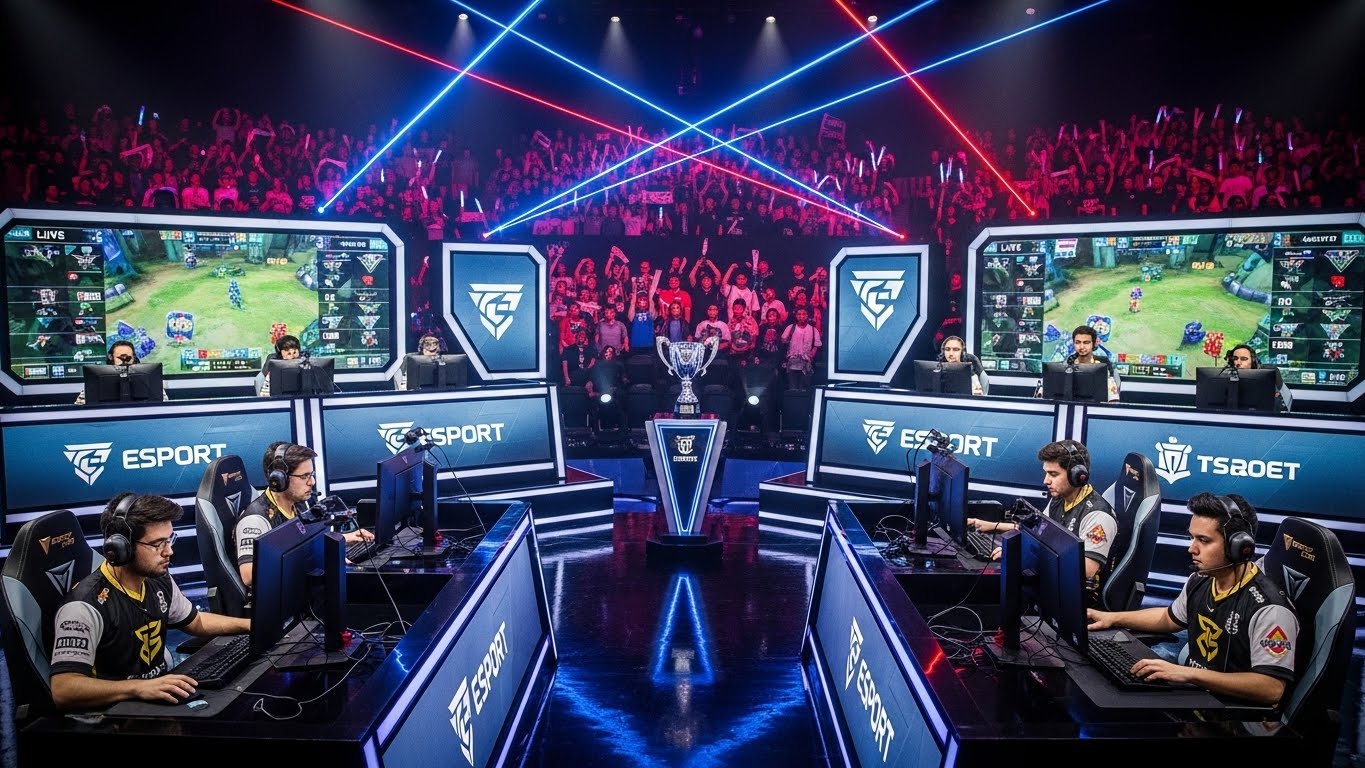
Esports, or electronic sports, has emerged from humble beginnings to become a multi-billion-dollar global industry, captivating audiences, generating significant revenue, and providing career opportunities for countless professionals. The 2000s marked the dawn of esports, and over the years, the scene has evolved dramatically, shaping a new era of competitive gaming. This blog post will take you on a journey through the evolution of esports from the early 2000s to the present day, examining key milestones, game-changing moments, and the cultural impact of this exciting industry.
The Early Beginnings of Esports in the 2000s
The Birth of Esports Communities
Esports, as we know it today, was not born overnight. In the early 2000s, competitive gaming was mostly a niche activity that appealed to a small group of enthusiasts. The primary drivers were local LAN (Local Area Network) parties, where gamers gathered to compete in titles such as “Quake” and “StarCraft”. These events laid the groundwork for what would eventually become large-scale esports tournaments.
One of the early milestones in esports was the rise of online gaming platforms like Battle.net and GameSpy, which allowed players to compete with others across the world without leaving their homes. These platforms became central hubs for multiplayer games like Warcraft III, StarCraft, and Counter-Strike, helping create the foundations for a global esports community.
Early Tournaments and the Rise of Pro Players
The first major esports tournaments began to take shape during the early 2000s. The World Cyber Games (WCG), founded in 2000, was one of the first global competitions, attracting gamers from around the world to compete in various games. The WCG quickly became one of the premier esports events, offering a platform for players to showcase their skills and gain recognition.
In addition to WCG, ESL (Electronic Sports League), founded in 2000, also played a significant role in fostering competitive gaming. ESL’s focus on organizing competitions for Counter-Strike and Warcraft III helped raise the profile of esports tournaments. These early competitions were relatively modest compared to the grand-scale events we see today, but they laid the groundwork for the professionalization of esports.
During this period, professional players like Fatal1ty (Johnathan Wendel) began to emerge as household names in the gaming world. Fatal1ty’s dominance in Quake and other titles helped establish the notion that esports could offer a legitimate career for dedicated gamers. This early generation of players inspired a new wave of gamers to pursue professional gaming, which in turn helped expand the reach of esports.
The 2010s: The Rise of Mainstream Esports
The Explosion of Esports Platforms
As the 2010s rolled in, the world of esports underwent a massive transformation. The growth of streaming platforms, most notably Twitch, played a pivotal role in bringing esports into the mainstream. Twitch, launched in 2011, revolutionized the way gamers interacted with each other and the audience. Twitch allowed players to broadcast their gameplay live to millions of viewers, effectively turning the gaming experience into a spectator sport.
The growth of Twitch gave rise to a new breed of influencers and streamers, some of whom made a career out of gaming content. These content creators were able to generate massive followings and attract sponsorships, signaling that there was not only a market for competitive gaming but also for entertainment related to gaming.
Major Esports Titles and Competitions
The 2010s also saw the emergence of some of the most iconic esports titles that are still popular today. Games like League of Legends, Dota 2, and Counter-Strike: Global Offensive became staples in the esports ecosystem. These games helped usher in the era of massive prize pools, with The International (TI) in Dota 2 becoming one of the most well-known esports tournaments, offering multi-million-dollar prizes.
In 2013, League of Legends (LoL) gained immense popularity, becoming one of the most-watched esports games in the world. Riot Games, the developer behind LoL, not only focused on making the game enjoyable but also on building a robust competitive scene with the League of Legends World Championship, which quickly became one of the most prestigious tournaments in esports.
Meanwhile, Overwatch, Blizzard’s team-based first-person shooter released in 2016, introduced a new wave of esports viewers. The Overwatch League (OWL) launched in 2018, offering city-based teams with substantial salaries and a level of organization never before seen in competitive gaming. The OWL’s professional infrastructure was a key indicator of how esports was becoming a legitimate business, attracting corporate sponsors and media attention.
The Economic Impact of Esports
By the mid-2010s, esports had truly become a global phenomenon. Prize pools for tournaments reached unprecedented levels, with some competitions offering tens of millions of dollars in winnings. Major brands such as Coca-Cola, Intel, Nike, and Red Bull began to sponsor esports teams and events, providing the financial support needed to grow the scene further. Esports organizations like Cloud9, Team Liquid, and Fnatic became household names, attracting millions of fans around the world.
The increasing commercialization of esports also led to the development of esports-focused venues, such as the Esports Arena in California and The Blizzard Arena in Los Angeles. These dedicated esports arenas became the stage for high-profile tournaments and attracted huge crowds, signaling that esports was no longer a niche hobby but a legitimate form of entertainment.
The Present Day: Esports in 2020s and Beyond
The Continued Growth of Esports
As we entered the 2020s, esports continued its growth trajectory, showing no signs of slowing down. In fact, the COVID-19 pandemic, which forced traditional sports to pause, proved to be a catalyst for esports’ surge in popularity. With in-person events canceled, esports organizations quickly pivoted to online tournaments, allowing the competitive gaming community to stay active and engaged.
The pandemic also encouraged people to explore gaming as a form of entertainment, leading to increased viewership across streaming platforms like Twitch and YouTube. Esports’ online nature made it uniquely positioned to thrive during a time of global uncertainty, and this only solidified its place in the entertainment industry.
The Rise of Mobile Esports
In recent years, mobile esports has emerged as one of the fastest-growing segments of the gaming industry. Titles like PUBG Mobile, Garena Free Fire, and Call of Duty: Mobile have gained massive followings, particularly in regions like Southeast Asia and India. Mobile esports has brought competitive gaming to a whole new audience, with millions of players participating in tournaments and watching streams.
The accessibility of mobile games has made esports even more inclusive, allowing players to compete from virtually anywhere with an internet connection. Mobile esports tournaments have seen significant prize pools, attracting sponsorships from major brands and media companies, further cementing the role of mobile gaming in the broader esports ecosystem.
Esports and Traditional Sports Partnerships
Esports has increasingly found itself intertwined with traditional sports organizations. In recent years, major sports teams, such as FC Barcelona, Manchester City, and Paris Saint-Germain, have entered the esports space by acquiring or creating esports teams. These organizations recognize the growing influence of esports, and their investment represents a shift in how esports is perceived.
Additionally, mainstream sports broadcasters like ESPN and Fox Sports have begun airing esports tournaments, marking the first time that competitive gaming has been featured prominently on traditional sports channels. This crossover between esports and traditional sports signals the growing recognition of esports as a legitimate form of entertainment and competition.
The Future of Esports
Looking ahead, the future of esports appears incredibly bright. With more investment pouring into the industry, advancements in technology, and the ever-growing number of viewers, esports is poised to continue its upward trajectory. The 2020s will likely see even more professionalization of the industry, with the potential for more global leagues, dedicated training facilities for players, and further partnerships with big-name sponsors.
One area to watch is the development of esports as an Olympic sport. While this has been a topic of debate for some time, discussions about esports being included in the Olympic Games have become more serious in recent years. As esports continues to gain mainstream acceptance, it’s possible that we will see esports featured in the Summer Olympics in the near future.
Additionally, virtual and augmented reality (VR and AR) technologies could revolutionize esports by offering more immersive and interactive experiences for both players and spectators. With VR and AR headsets becoming more affordable, it’s only a matter of time before esports tournaments fully embrace these technologies, creating entirely new formats of gameplay and audience engagement.
Conclusion
From its humble beginnings in local LAN parties to the massive global industry it is today, esports has come a long way. The 2000s were a time of experimentation and growth, setting the stage for the rise of major tournaments, iconic games, and influential players. The 2010s saw esports gain mainstream recognition, with streaming platforms, mobile gaming, and professional leagues taking the industry to new heights.
As we move into the 2020s and beyond, esports shows no signs of slowing down. With more investment, technological advancements, and the continued blending of traditional sports and gaming, the future of esports looks incredibly promising. Whether you’re a casual gamer, a hardcore esports fan, or a professional player, there’s no denying that esports is here to stay and will continue to shape the world of entertainment for years to come.