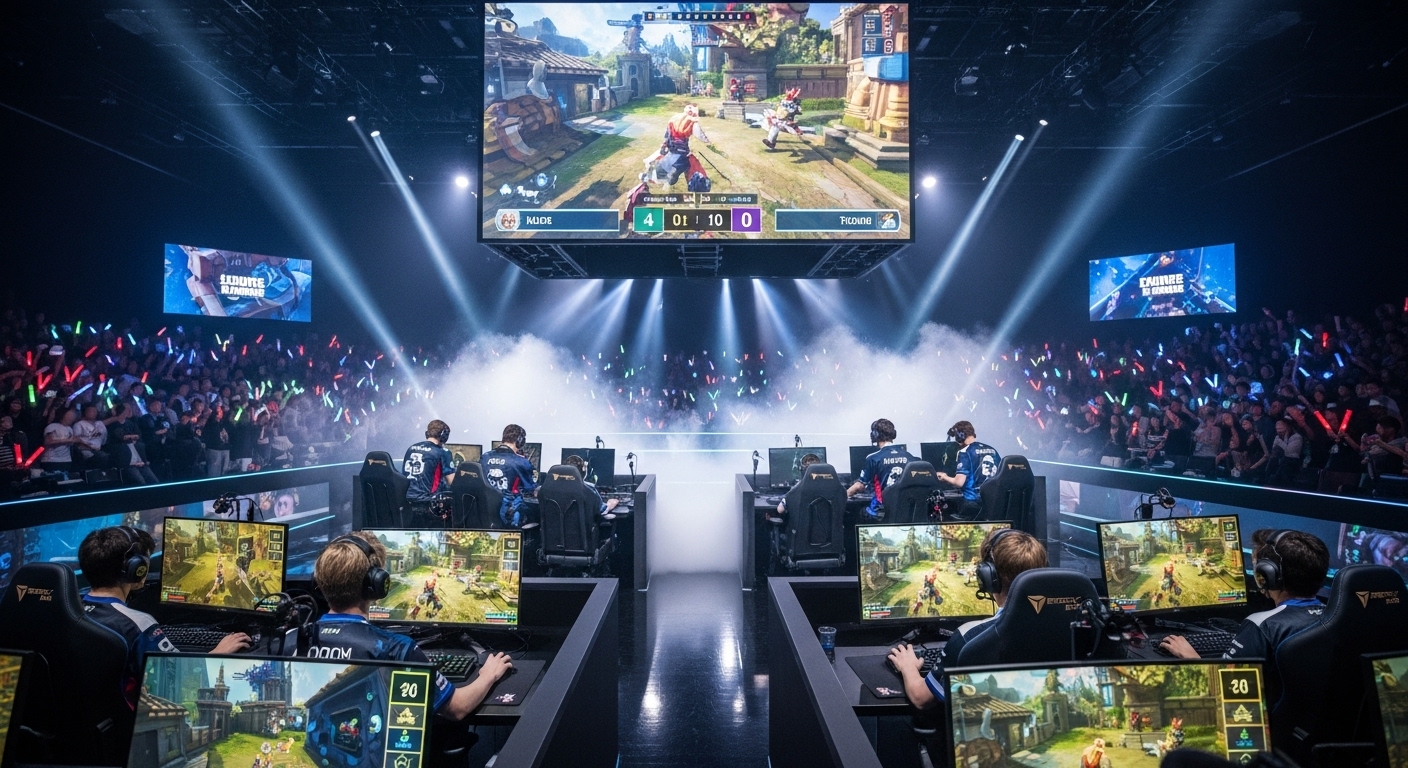
Esports has evolved from a niche hobby into a global cultural and economic phenomenon. What began as small LAN tournaments among friends has grown into massive international competitions filling arenas and drawing millions of online viewers. This explosion in popularity has not only changed how people perceive gaming but also inspired a new generation of professionals—especially game designers. For many aspiring creators, esports represents both a dream and a blueprint, showcasing how engaging design, balance, and community-driven development can elevate a game into a global spectacle.
The Connection Between Esports and Game Design
At its core, esports is about competition and mastery. Every successful competitive game—from League of Legends to Counter-Strike to Dota 2—thrives because of careful game design choices that balance fairness, challenge, and excitement. Aspiring game designers study these mechanics to understand what keeps players engaged for years.
Game designers learn that esports titles must be intuitive enough for new players to understand, yet deep enough to reward mastery. For example, the success of games like Overwatch or Valorant lies in their ability to merge accessibility with strategic depth. Future designers watch how developers continually tweak balance, add new content, and communicate with their communities to maintain this equilibrium. Through esports, designers gain real-world lessons about what works in player engagement, game balance, and community longevity.
Esports as a Classroom for Game Design Principles
Esports can be seen as a living classroom for design principles. Game design programs in universities often teach concepts like player motivation, feedback loops, and progression systems. In esports, these ideas are visible in action every day. The tension of a close match, the satisfaction of mastering a difficult mechanic, and the strategic mind games between teams—all stem from smart design.
Aspiring designers who watch esports tournaments gain a front-row view of these design choices playing out in real time. They see how character abilities, map layouts, and item systems influence gameplay outcomes. For instance, League of Legends’ map design encourages team cooperation and strategic diversity, while games like Rocket League demonstrate how physics-based mechanics can create endless depth with simple controls. Observing professional play reveals how design impacts competition and how small tweaks can shift entire metagames.
Inspiration from Esports Communities
Beyond gameplay mechanics, esports fosters a unique sense of community that deeply influences how future designers think about player engagement. Unlike traditional single-player games, esports titles thrive on collaboration, teamwork, and communication—both in and out of the game.
The communities built around esports are vibrant ecosystems filled with content creators, analysts, fans, and modders. For game designers, this community-driven culture is a goldmine of inspiration. They see how player feedback shapes updates and patches, how fan-made content extends a game’s lifespan, and how emotional investment turns a digital experience into a shared culture.
Many modern games now prioritize community tools—like spectator modes, replay systems, and mod support—because of lessons learned from esports. Aspiring designers understand that successful games must not only be fun to play but also exciting to watch, discuss, and share.
Learning from Competitive Balance and Patch Cycles
Balance is one of the most challenging aspects of game design, and esports provides invaluable case studies in this area. Developers of competitive titles like Dota 2 or Apex Legends release regular patches to adjust game balance. These updates can dramatically shift strategies and character usage, keeping the competitive scene fresh and dynamic.
Future game designers analyze these balance cycles closely. They study patch notes and observe how changes affect gameplay at every level—from casual players to professionals. This process teaches them that no game is ever truly “finished.” Instead, continuous iteration is part of creating a living, evolving experience.
Moreover, aspiring designers learn that balance is not just about numbers. It’s also about perception. A character might be statistically fair but feel overpowered to players. The best designers understand this psychological balance, a lesson esports demonstrates vividly.
The Rise of Educational Programs and Esports Design Studies
Recognizing the influence of esports, many universities have started integrating esports and game design programs into their curriculum. Students can now study topics like competitive balance, user experience design, and esports management. This academic integration signals how seriously the industry views esports as a model for innovation.
In these programs, students often analyze real esports ecosystems to learn how design choices affect player behavior and engagement. For instance, they might study why certain game modes attract more viewers or how visual clarity affects spectating. Esports thus provides a laboratory for testing design ideas and understanding their real-world impact.
Furthermore, some institutions even host collegiate esports tournaments, giving students direct experience in both gameplay and event design. These experiences encourage them to think critically about how rules, maps, and scoring systems shape competition.
The Influence of Esports Broadcasting on Game Design
Esports broadcasting has also reshaped how designers think about visual communication. Unlike single-player titles, esports games must cater to both players and spectators. This means designers must ensure that actions, objectives, and player statuses are easily readable on screen.
Aspiring designers studying esports learn the importance of visual clarity and information hierarchy. Games like League of Legends or Valorant use clear color coding, health bars, and minimaps to make matches understandable to viewers. Designers realize that successful games must communicate complex information instantly, enhancing both playability and watchability.
This emphasis on clarity influences broader trends in game design. Many modern games now prioritize readability, spectator modes, and cinematic replay tools because of esports’ impact. These features not only improve competitive integrity but also make games more appealing to content creators and fans.
How Esports Encourages Innovation in Game Mechanics
Esports continually pushes the boundaries of innovation. Every major esports title introduces or refines mechanics that influence future designs. Games like Fortnite revolutionized building mechanics, while MOBAs like Dota 2 established deep strategic frameworks that inspire hybrid genres.
Future game designers study these innovations to create their own twists. They learn that success often lies in combining familiar elements in new ways. For instance, Valorant combined Counter-Strike’s tactical shooting with hero-based abilities, creating a fresh competitive formula. This mindset of experimentation and iteration is central to modern design philosophy.
Esports also encourages designers to think about balance across multiple playstyles and roles. Whether it’s supporting teammates in Overwatch or jungling in League of Legends, these role-based systems teach designers how to create games that support diverse player identities.
The Economic and Career Inspiration of Esports
Esports doesn’t just inspire creative design ideas—it also motivates career ambitions. The booming esports industry offers opportunities beyond playing professionally. Game designers see a growing demand for careers in UX design, level design, balancing teams, and competitive systems design.
The visibility of esports success stories shows aspiring creators that gaming can be a viable and respected profession. They witness developers being celebrated alongside players, reinforcing that good design is the foundation of every great competition. This recognition helps redefine gaming from a pastime into a legitimate career path in technology, art, and design.
Storytelling and Emotional Design in Esports
Another critical lesson that esports imparts to future designers is the power of storytelling. Every esports match is a narrative filled with heroes, underdogs, and climactic moments. Designers learn that emotion is key to engagement.
The structure of esports tournaments—with arcs of redemption, rivalry, and surprise—mirrors the storytelling found in film or literature. Game designers take inspiration from this to create titles that allow players to craft their own stories. They understand that emotional investment comes from tension, stakes, and the potential for triumph or failure.
Games like League of Legends and Overwatch have built universes that blend narrative depth with competitive design. Future designers observe how lore and gameplay can complement each other, making players feel connected to the characters and the competition simultaneously.
Esports as a Platform for Diversity and Inclusion in Design
Esports has also sparked important conversations about diversity and accessibility in gaming. Designers now think more critically about how to make games inclusive for all players—regardless of background, gender, or physical ability.
The global nature of esports demonstrates that gaming is a universal language. Aspiring designers see players from different cultures competing together, which motivates them to design with inclusivity in mind. This has led to broader representation in character design, localization efforts, and customizable gameplay settings.
As a result, future game designers are not just inspired to make games that are fun but also ones that are welcoming and culturally resonant.
The Role of Technology and Data in Modern Game Design
Esports heavily relies on data analytics for performance tracking, matchmaking, and balance adjustments. Future game designers draw inspiration from this integration of technology and creativity. They see how real-time analytics can improve player experiences and how data-driven insights can refine design decisions.
Developers now use telemetry data to monitor how players interact with their games, identifying patterns and pain points. Aspiring designers learn that great design isn’t just about intuition—it’s also about listening to the data. Esports provides a practical demonstration of this harmony between art and science.
The Next Generation of Designers Fueled by Esports
Ultimately, esports is shaping a new generation of designers who understand gaming not just as entertainment but as an ecosystem. They see how competition, community, creativity, and technology intersect to create something far greater than the sum of its parts.
Esports has shown them that successful design is about adaptability, empathy, and communication. Whether designing for balance, story, or spectacle, these future creators carry the lessons of esports into their work—making games that are more interactive, more inclusive, and more engaging than ever before.
Conclusion
Esports is far more than just competitive gaming—it is a movement that influences the very foundation of game design. It teaches lessons about balance, innovation, storytelling, and community that are essential for future creators. Through observing tournaments, studying patches, and engaging with communities, aspiring designers gain insights that no textbook could offer.
As esports continues to grow, its impact on education, creativity, and professional development will only deepen. The future of game design will be built by those inspired by the energy, strategy, and artistry of esports. For these future designers, esports is not just a spectacle—it is a source of endless learning and inspiration that continues to shape the digital worlds of tomorrow.