Introduction
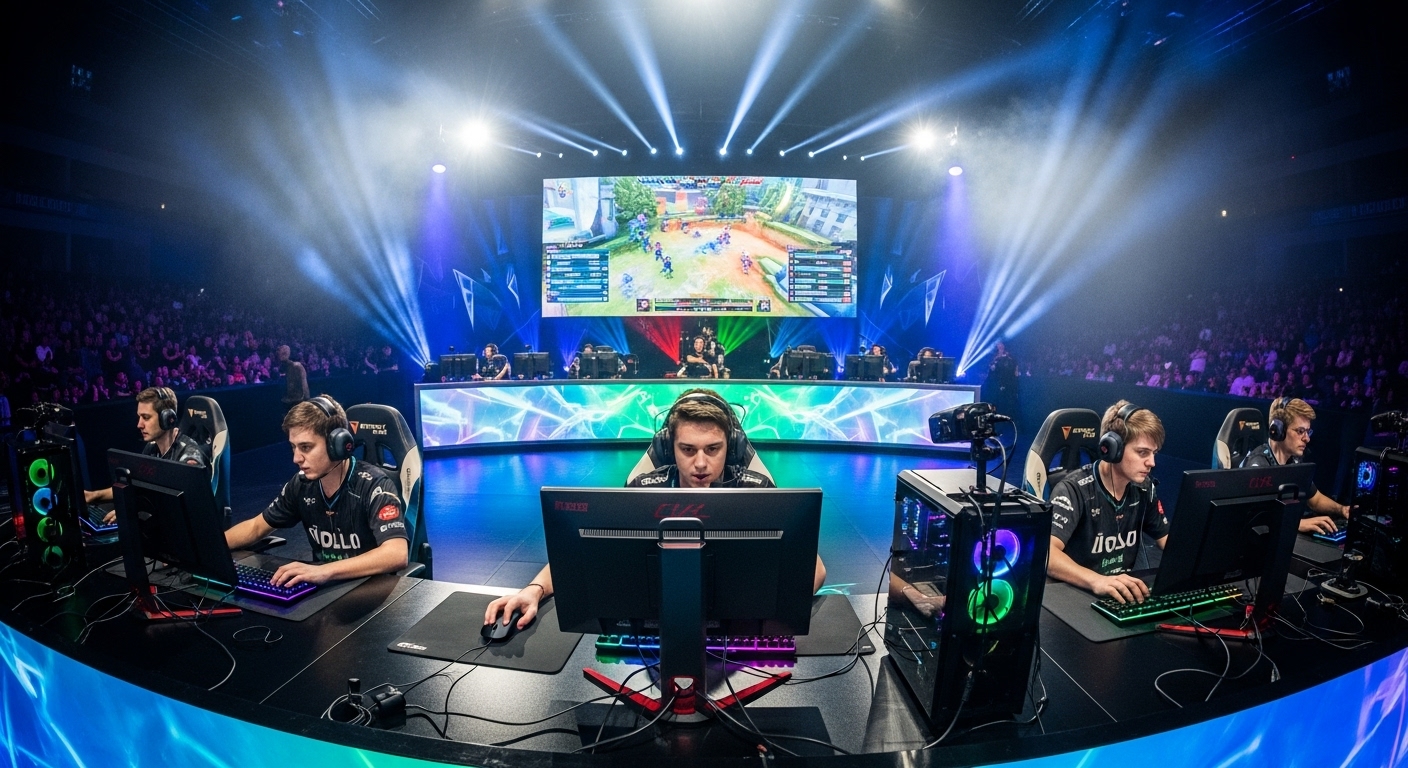
Esports, or electronic sports, has evolved dramatically in the past few decades. What once began as a niche activity, enjoyed by a small group of passionate gamers, has now grown into a multi-billion-dollar industry with global reach. Esports is no longer confined to basement tournaments or obscure LAN parties; it is now a mainstream form of entertainment, with massive audiences, professional teams, and dedicated leagues. The industry’s rapid rise has been fueled by a combination of technological advancements, the increasing influence of streaming platforms, and the changing perceptions of gaming as a legitimate sport.
In this blog post, we will explore the growth of esports, the factors that have contributed to its rise, the various games and genres that dominate the scene, and the future outlook for this rapidly evolving industry. Let’s dive into why esports has become one of the most exciting developments in modern entertainment.
The Origins of Esports
Esports traces its roots back to the 1970s and 1980s when competitive gaming was still in its infancy. Early examples of competitive video gaming include games like “Pong” and “Space Invaders,” where players would compete for high scores. However, it was the launch of titles like “Street Fighter II” and “Doom” in the early 1990s that laid the groundwork for the modern esports scene. These games introduced multiplayer modes, allowing players to battle against one another either locally or over the internet.
The 1990s also saw the first major esports tournaments, with events like the “Red Annihilation” tournament for “Quake” and the “World Cyber Games” (WCG) in the early 2000s paving the way for competitive gaming on a larger scale. By the mid-2000s, games like “Warcraft III” and “StarCraft” had cemented their places as esports staples, especially in regions like South Korea, where gaming culture was already starting to thrive.
However, it wasn’t until the 2010s that esports truly exploded. With the advent of streaming platforms like Twitch and YouTube, it became easier for players and fans to engage with esports events. The rise of game developers investing in professional leagues and the growing appeal of esports as an entertainment product contributed to its explosive growth.
Key Factors Behind the Rise of Esports
Several key factors have contributed to the meteoric rise of esports, transforming it from a niche hobby into a global entertainment juggernaut.
1. The Role of Streaming Platforms
In the early days of esports, viewing competitive games was often a limited experience, restricted to live audiences or small-scale broadcasts. However, with the launch of platforms like Twitch in 2011, this all changed. Twitch, a platform dedicated to live streaming video games, allowed players to stream their gameplay and interact with viewers in real-time. This gave rise to the “streaming culture,” where gamers could build communities, attract sponsorships, and create a source of income by playing their favorite games.
Streaming platforms have played a crucial role in popularizing esports, as fans could now watch high-level gameplay from top players and teams in real-time. Moreover, these platforms allowed esports tournaments to be broadcasted live, bringing events like “The International” (the premier tournament for “Dota 2”) and “League of Legends Worlds” to global audiences.
2. Professionalization of Esports
The professionalization of esports is another significant factor in its rise. As the popularity of competitive gaming grew, so did the need for infrastructure that supported professional teams, coaches, analysts, and broadcasters. Game developers began investing heavily in esports leagues and events, ensuring that players could compete for serious prize money and sponsorship deals.
Games like “League of Legends,” “Counter-Strike: Global Offensive,” and “Overwatch” became the backbone of the professional esports ecosystem. These games established competitive leagues with franchised teams, much like traditional sports leagues such as the NBA or NFL. This model offered players job security, long-term career paths, and a stable competitive environment.
3. The Changing Perception of Gaming
For years, gaming was often seen as a solitary hobby or a waste of time. However, with the rise of esports, public perception of gaming has changed dramatically. Esports has proven to be more than just playing games for fun—it’s a legitimate sport requiring skill, strategy, teamwork, and intense focus. The mental and physical demands of esports are now widely acknowledged, and players train just as hard as athletes in traditional sports.
This shift in perception has been instrumental in attracting mainstream media coverage, sponsorship deals, and government recognition. In fact, some countries, including South Korea and China, have embraced esports as an official sport, offering government-backed initiatives to support its growth.
4. Increased Investment from Major Brands
As esports has grown, so has the involvement of major corporations and brands. Big names like Coca-Cola, Intel, Mercedes-Benz, and Red Bull have recognized the potential of esports as a marketing tool and have invested heavily in the industry. These brands sponsor tournaments, support esports teams, and partner with game developers to promote their products within the esports ecosystem.
Additionally, traditional sports teams and personalities have also joined the esports scene. NBA teams like the Golden State Warriors and the Cleveland Cavaliers have invested in esports franchises, while professional athletes like Shaquille O’Neal and Michael Jordan have shown interest in sponsoring teams or becoming involved in esports in other ways.
5. Social Media and Online Communities
Social media platforms like Twitter, Instagram, and Reddit have allowed esports to grow by connecting players, fans, and content creators in ways never before possible. Through these platforms, fans can follow their favorite players and teams, interact with one another, and participate in discussions about game strategies, tournament results, and upcoming events.
Additionally, esports-specific forums and websites like Liquipedia and GosuGamers have become hubs for esports enthusiasts to share news, statistics, and analysis of the competitive scene. These online communities have been instrumental in fostering a global fanbase for esports, allowing people from all corners of the world to come together and celebrate their shared passion for gaming.
The Most Popular Esports Games
While esports encompasses a wide variety of games, certain titles have risen to prominence due to their competitive nature, accessibility, and community support. Let’s explore some of the most popular esports games that have shaped the industry.
1. League of Legends
“League of Legends” (LoL) is arguably the most influential game in the world of esports. Developed by Riot Games, LoL is a multiplayer online battle arena (MOBA) game that pits two teams of five players against each other in a strategic, fast-paced battle. The game requires teamwork, strategy, and individual skill to outsmart and outplay the opposing team.
LoL’s competitive scene is the largest and most developed in esports, with the League of Legends World Championship drawing millions of viewers each year. The game’s ecosystem includes professional leagues in regions like North America (LCS), Europe (LEC), Korea (LCK), and China (LPL), creating a truly global competitive network.
2. Dota 2
“Dota 2” is another major title in the esports landscape, developed by Valve Corporation. Like LoL, Dota 2 is a MOBA that features intense strategy and fast-paced action. However, Dota 2 is known for its complexity, with more heroes, items, and mechanics than its counterpart.
The “International,” Dota 2’s premier tournament, is one of the most significant events in esports, with prize pools often reaching tens of millions of dollars. This tournament has attracted attention from both traditional sports fans and esports enthusiasts due to its high stakes and dramatic moments.
3. Counter-Strike: Global Offensive (CS: GO)
“Counter-Strike: Global Offensive” (CS: GO) is a first-person shooter (FPS) that has been a staple of the esports scene for over a decade. The game focuses on tactical gameplay, with one team attempting to plant a bomb while the other defends. It requires precision aiming, communication, and teamwork, making it a thrilling experience for both players and spectators.
CS: GO’s competitive scene is robust, with numerous international tournaments and leagues, including ESL Pro League, DreamHack Masters, and the CS: GO Major Championships. The game’s simplicity and accessibility make it easy for new players to pick up, while its depth and complexity provide long-term challenges for competitive players.
4. Overwatch
“Overwatch,” developed by Blizzard Entertainment, is a team-based FPS that features unique heroes, each with their own set of abilities and playstyles. The game blends fast-paced action with strategic team coordination, making it a perfect fit for esports.
The Overwatch League (OWL), launched in 2018, is one of the most prominent examples of a franchised esports league. Teams represent cities around the world, and the league has gained considerable attention due to its high production value and ties to traditional sports. Overwatch’s colorful, diverse cast of characters also appeals to a broader audience, expanding esports beyond traditional gamers.
5. Fortnite
While not a traditional esports game in the strictest sense, “Fortnite” has had a massive impact on competitive gaming. Developed by Epic Games, Fortnite is a battle royale game that combines shooting with building mechanics. Its competitive scene has grown rapidly, with large-scale tournaments and huge prize pools, especially for solo players.
Fortnite’s ability to bring in a younger audience, coupled with its crossover with mainstream entertainment (such as in-game concerts and collaborations with celebrities), has made it one of the most popular games in the world.