Esports has evolved from a niche hobby into a global phenomenon that attracts millions of viewers and offers lucrative career opportunities. What was once considered a pastime for gamers has now become a multi-billion-dollar industry, with professional players, large-scale tournaments, and a passionate fanbase that rivals traditional sports. In this blog, we’ll dive into the world of esports, exploring its growth, impact on the gaming industry, and the future of competitive gaming.
1. What is Esports? A New Era of Competitive Gaming
Esports, or electronic sports, refers to competitive video gaming where individuals or teams compete in popular multiplayer games for prizes, titles, and recognition. Unlike casual gaming, esports involves structured competitions, often organized by professional leagues or tournaments, where players compete at the highest level. The games featured in these tournaments are typically strategy-based or require exceptional skill and coordination.
From games like League of Legends and Dota 2 to Counter-Strike: Global Offensive and Overwatch, esports covers a wide range of genres, ensuring that there’s something for every kind of gamer. The rise of online streaming platforms like Twitch has also allowed esports to thrive, providing fans with direct access to live competitions and enabling players to build personal brands.
2. The Growth of Esports: From Hobby to Industry
Esports has grown exponentially over the past two decades. What began as a small, underground community of competitive gamers has now blossomed into a global industry. In the early 2000s, esports tournaments were mostly held locally or regionally, with small cash prizes and limited media coverage. However, the rise of streaming platforms like Twitch in the late 2000s, along with the increasing popularity of multiplayer games, laid the foundation for the modern esports scene.
The development of esports leagues, such as the Overwatch League and League of Legends Championship Series (LCS), helped bring structure and legitimacy to competitive gaming. Major publishers like Riot Games and Blizzard Entertainment began investing heavily in esports, sponsoring tournaments and professional teams. As a result, prize pools for tournaments have skyrocketed, with the International—the annual Dota 2 tournament—offering prize money that often exceeds $30 million.
Esports has also expanded beyond video games. Major brands, traditional sports organizations, and even educational institutions have entered the space, with sponsorship deals, endorsements, and esports scholarships becoming more common.
3. The Impact of Esports on the Gaming Industry
The success of esports has had a profound impact on the gaming industry. For one, it has influenced game development. Many game developers now design their titles with esports in mind, creating balanced gameplay, competitive features, and spectator-friendly elements. Games like Fortnite and Apex Legends have embraced both casual play and professional competition, offering regular updates and events to keep players engaged at every level.
Additionally, the rise of esports has encouraged the growth of gaming hardware. Esports professionals rely on top-tier equipment, such as high-performance gaming laptops, custom-built PCs, and precision controllers, driving innovation in the hardware sector. Major tech companies like NVIDIA, Intel, and Razer have become integral sponsors of esports events, further linking the gaming and technology industries.
The increasing popularity of esports also signifies a shift in how people view gaming. No longer dismissed as a mere hobby, gaming is increasingly recognized as a legitimate form of entertainment and even a potential career path. In fact, many pro gamers now make a living from playing, streaming, and competing, marking a shift toward a professional ecosystem within the gaming world.
4. The Esports Community: Fans, Players, and Teams
The esports community is a diverse and passionate group of individuals—players, fans, and content creators—who share a common love for competitive gaming. Fans, often referred to as “esports enthusiasts,” support their favorite teams and players, much like traditional sports fans do for football or basketball teams. These fans are fiercely loyal, attending tournaments, watching live streams, and participating in online communities to discuss the latest games and strategies.
For players, esports offers more than just fame and fortune. It’s a place to showcase their skill and compete against the best in the world. Many professional players start their careers at a young age, honing their abilities in local tournaments or by streaming their gameplay online. As they rise through the ranks, they can sign with esports organizations, receiving sponsorships and support to pursue gaming as a full-time profession.
Esports teams are often built around a core group of players who specialize in a particular game or role within a game. These teams compete in various tournaments and leagues throughout the year, working with coaches, analysts, and managers to refine their strategies and enhance team performance. Some of the most famous esports organizations, like Team Liquid, Cloud9, and T1, have loyal fanbases and offer training facilities for their players, further professionalizing the esports landscape.
5. Esports Tournaments: The Heart of Competitive Gaming
At the core of esports lies the tournaments and leagues that bring together the world’s best players to compete for glory. These tournaments are not only high-stakes competitions but also serve as entertainment spectacles, drawing large audiences both in-person and online.
Tournaments like The International, League of Legends Worlds, and ESL One are massive events in the gaming calendar, attracting millions of viewers worldwide. The prize pools for these tournaments have grown to unprecedented levels, with some games offering multi-million dollar rewards for the winners. These tournaments are broadcast live on platforms like Twitch, YouTube, and Facebook, allowing fans to watch the action in real time and interact with commentators, analysts, and fellow viewers.
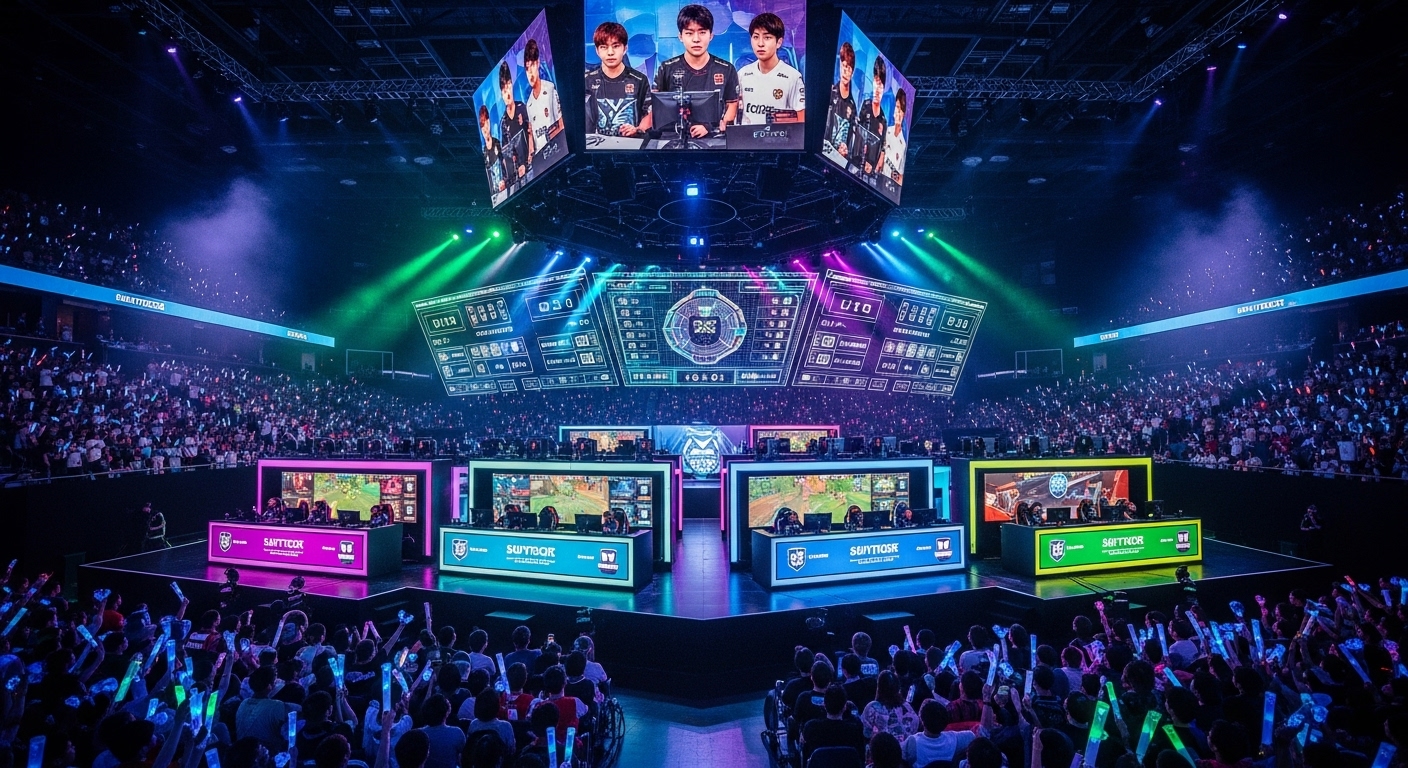
Esports tournaments are often held in large arenas or stadiums, where fans gather to watch the competition live. The atmosphere is electric, with fans cheering for their favorite players and teams, creating a sense of community and excitement. These live events are complemented by post-game analysis, interviews, and fan interactions, all contributing to the growth of esports as a form of mainstream entertainment.
6. The Future of Esports: Expanding Horizons
The future of esports looks incredibly promising, with continued growth expected across multiple dimensions. As the industry matures, new games and genres will emerge, each with the potential to introduce fresh competition formats and new fanbases. Mobile esports, for example, is already growing rapidly in regions like Asia, with games like PUBG Mobile and Clash Royale attracting massive audiences.
Esports will also continue to diversify in terms of technology and experience. Augmented reality (AR) and virtual reality (VR) are likely to become more integrated into esports competitions, creating more immersive experiences for both players and viewers. These technologies could enable new types of gameplay and viewing formats, blurring the lines between virtual and physical realities.
Additionally, as esports becomes more mainstream, we can expect further integration with traditional sports. This could mean more partnerships between esports organizations and established sports teams, as well as larger investments from traditional sports networks and sponsors. The blending of esports and traditional sports will likely lead to cross-promotion, expanding the audience for both.
Finally, education and esports are beginning to intersect. Many universities now offer scholarships for competitive gamers, and esports programs are being integrated into college curriculums, offering students the chance to pursue a career in gaming, whether as a player, coach, or analyst.
7. Conclusion: A New Era of Entertainment
Esports has undoubtedly become a dominant force in the entertainment world, capturing the hearts of millions of fans and providing new career opportunities for gamers around the globe. With its rapid growth, esports has transformed from a hobby into a legitimate professional industry, with its own culture, ecosystem, and economic impact.
As the world continues to embrace esports, its future appears limitless. The competitive gaming community is expanding, technology is advancing, and more people are discovering the excitement and skill required to excel in esports. For players, fans, and organizations alike, esports represents the intersection of passion, skill, and entertainment—a new era of gaming that’s here to stay.